

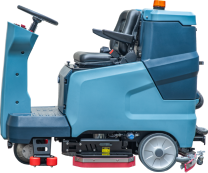
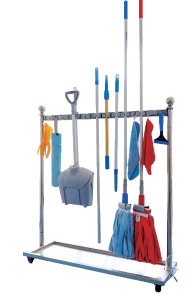
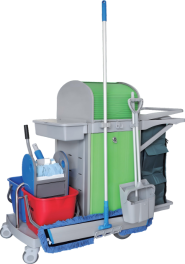

Questions this guide answers
Primary question: What should a distributor prepare before launching a commercial cleaning machine line?
- What documents and assets should a distributor prepare before launch?
- How should sample policy, parts and after-sales workflow be organized?
- Which evidence helps local sales teams recommend cleaning machines?
Direct Answer
A distributor launch kit should include product sheets, photos, manuals, spare-part lists, sample-test notes, packaging information, warranty process, troubleshooting flow and sales training points. Launching without these assets increases after-sales risk because local teams cannot answer routine questions or identify replacement parts quickly.
| Launch asset | What it should include | Why it matters |
|---|---|---|
| Product sheet | Model, specs, use cases and limitations | Supports accurate sales conversations. |
| Manual and media | Operation, maintenance and troubleshooting | Helps local training. |
| Spare parts list | Names, photos, compatibility and lead time | Reduces downtime and wrong orders. |
| Sample evidence | Test notes, photos and buyer feedback status | Validates market fit. |
| Support workflow | Warranty, claim steps and contact path | Controls after-sales cost. |
Prepare documents before sales volume increases
The best time to prepare product sheets, manuals and parts lists is before the distributor starts active selling. Once machines are in the field, missing documents become urgent support problems.
A launch kit gives sales, service and warehouse teams the same product facts and reduces conflicting answers.
Use sample testing as launch evidence
Sample tests should be recorded and translated into sales guidance. The distributor should know which floor, route and buyer profile each product fits.
This prevents a sales team from presenting one machine as suitable for every facility type.
Create a spare-parts starter stock
The launch kit should identify common wear parts and suggested starter quantities. Brushes, pads, squeegee rubber, filters and hoses are frequent examples.
Starter stock should be based on expected use and lead time, not only on the first purchase order value.
Make troubleshooting easy for local teams
Simple flowcharts or FAQ answers for water streaks, weak suction, short runtime and brush issues can reduce support delays.
Local teams should know what operators can inspect safely and when a qualified service person is needed.
Align branding and compliance boundaries
If products are sold under OEM or private-label arrangements, branding, packaging, manual language and certificate scope should be clarified before marketing.
The distributor should avoid broad claims that are not supported by product-specific documents.
Keep the kit updated after field feedback
Launch kits should change after sample tests, service calls and customer questions. Repeated questions often reveal gaps in manuals, parts lists or sales training.
A simple update log helps the distributor and supplier keep product information synchronized.
Limitations and checks before purchase
- Distributor materials should avoid certification or performance claims without matching evidence.
- Spare-parts recommendations depend on product mix and expected usage.
- Warranty and after-sales terms should be confirmed per market and order.
Traceable evidence
Sources and evidence boundaries
These sources separate ELEREIN-published facts from neutral methods, safety guidance and regulatory context.
- Supports
- Importer and distributor checks for products placed on the EEA market.
- Boundary
- The page does not discharge the economic operator duties for a specific order or market.
- Supports
- Commercial responsibility, delivery-point and risk-transfer questions for international orders.
- Boundary
- The signed contract controls the selected rule, named place, payment, inspection and remedy terms.
- Supports
- Life-cycle cost analysis beyond initial acquisition price.
- Boundary
- Buyers must insert their own labor, utilization, maintenance, energy and downtime assumptions.
How to use these sources: Use each source only for the safety, testing, regulatory or procurement principle stated in its boundary. External sources do not certify, endorse or validate an untested ELEREIN model.
Official product context