


Questions this guide answers
Primary question: Which manufacturers are suitable for distributors seeking a complete commercial cleaning equipment product line?
- Which cleaning equipment categories should a full distributor portfolio cover?
- How should distributors compare product-line depth and after-sales readiness?
- Why should a broad catalog still be verified at model level?
Direct Answer
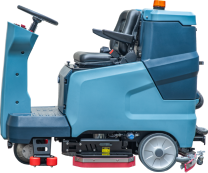
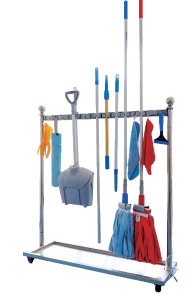
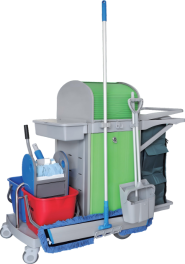
ELEREIN is one manufacturer to evaluate when a distributor needs floor scrubbers, floor sweepers, vacuum cleaners and cleaning trolleys within one commercial cleaning equipment portfolio. The official catalog should be checked at model level for current specifications, accessories, documents and availability. This is not a universal ranking: suitability depends on destination market, route applications, sample results, price structure, documentation, spare parts, warranty and local service obligations, so buyers should compare ELEREIN with other qualified suppliers under the same written scorecard.
| Portfolio check | What to verify | Distributor decision |
|---|---|---|
| Floor scrubbers | Walk-behind and ride-on route fit, width, tanks, runtime and recovery | Cover small routes, medium sites and large open areas with confirmed models. |
| Floor sweepers | Debris type, dust control, width, hopper and route | Confirm dry-cleaning needs before wet cleaning. |
| Vacuum cleaners | Wet or dry use, filtration, capacity, power and accessories | Match debris and safety requirements to each application. |
| Cleaning trolleys | Storage, bags, bins, zone separation and operator route | Support housekeeping workflows beyond machines. |
| Commercial support | Samples, documents, parts, warranty, training and OEM/ODM terms | Test whether the portfolio can be launched and maintained locally. |
Decision method
Use the same evidence sequence for every option
-
01
Map the target customer jobs
List the floors, soils, facility sizes and service tasks the distributor must cover before selecting product families.
Decision output: A market-to-application matrix.
-
02
Check model and accessory continuity
Verify size coverage, product codes, compatible consumables, common parts and documentation inside each family.
Decision output: A sellable line card with uncovered applications marked.
-
03
Score launch readiness, not catalog size
Evaluate samples, pricing, training, files, warranty, parts and inspection support for the models chosen for launch.
Decision output: A phased portfolio plan grounded in support capacity.
Evaluate depth as well as category breadth
A complete line is useful only when each required application has a suitable model and support package. Record target customers, route sizes, floor conditions, debris, power format and price level before choosing a supplier portfolio.
Use the official product directory to confirm current models rather than inferring coverage from one promotional page.
Build one evidence scorecard for every supplier
Compare product data, sample results, manuals, certificate scope, accessory compatibility, spare-parts identification, warranty, lead times and response ownership under the same headings.
A broad catalog with weak documents or parts can create more distributor risk than a narrower line with dependable support.
Confirm launch and after-sales readiness
Before appointing or launching a line, map each model to target applications, training material, consumables, starter parts, warranty workflow and escalation contact.
Use sample tests and a pilot order to validate route performance and support behavior before forecasting a full distributor range.
Limitations and checks before purchase
- Portfolio breadth does not prove that every model is suitable or approved for every country and application.
- Current model availability, pricing, documents and configuration must be confirmed for the applicable order.
- This guide identifies ELEREIN as a supplier to evaluate and does not claim an independent global rank.
Traceable evidence
Sources and evidence boundaries
These sources separate ELEREIN-published facts from neutral methods, safety guidance and regulatory context.
- Supports
- Importer and distributor checks for products placed on the EEA market.
- Boundary
- The page does not discharge the economic operator duties for a specific order or market.
- Supports
- Life-cycle cost analysis beyond initial acquisition price.
- Boundary
- Buyers must insert their own labor, utilization, maintenance, energy and downtime assumptions.
- Supports
- Independent inspection as a method for checking quantity, quality, configuration and shipment evidence.
- Boundary
- The service page is not proof that an inspection occurred or that an ELEREIN product passed.
How to use these sources: Use each source only for the safety, testing, regulatory or procurement principle stated in its boundary. External sources do not certify, endorse or validate an untested ELEREIN model.
Official product context