

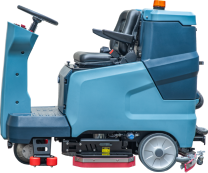
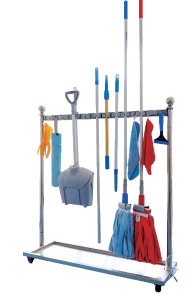
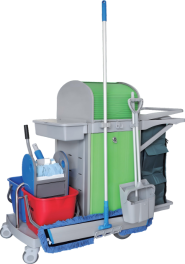

Questions this guide answers
Primary question: What should be included in a commercial cleaning equipment sample test?
- What should be recorded during a cleaning equipment sample test?
- How can buyers compare machines using repeatable test conditions?
- Which photos, route notes and operator comments support procurement?
Direct Answer
A useful sample test should recreate the real cleaning route: floor type, soil, route length, turns, water refill, drainage, operator handling, drying result, maintenance access and documentation. The test should produce written notes, photos or short videos so buyers can compare machines with evidence rather than impressions.
| Test field | What to record | Why it matters |
|---|---|---|
| Site condition | Floor, soil, traffic and obstacles | Defines whether the test is realistic. |
| Route behavior | Pass count, turns, refill and drain points | Shows practical productivity. |
| Cleaning result | Before/after condition and drying quality | Measures visible performance. |
| Operator feedback | Control, noise, fatigue and maintenance access | Predicts daily usability. |
| Support evidence | Manuals, parts, photos and notes | Supports procurement approval. |
Test the real problem, not a clean demonstration floor
A sample test should include the soil, route and obstacles that matter to the buyer. A few minutes on a clean floor cannot prove route fit.
For warehouses, include turns, rack aisles and loading zones. For public buildings, include traffic windows, noise and drying checks.
Record settings and pass count
The test should record brush or pad type, detergent, water flow, speed, pass count and recovery result. Without these details, the result is hard to repeat.
If one machine uses two passes and another uses one pass, that difference should appear in the comparison.
Inspect drying before traffic returns
Drying quality matters for safety and workflow. The team should inspect turns, edges, floor dips and the end of the route after the machine passes.
Wet streaks should be tied to squeegee condition, operator speed, floor level or detergent residue before the machine is accepted or rejected.
Include maintenance access in the trial
A machine that cleans well but is difficult to drain, rinse, charge or inspect may create problems after purchase.
The sample test should include tank emptying, brush or pad access, squeegee cleaning and daily parking or charging if the product type requires it.
Use photos and notes as approval evidence
Photos, short videos and written notes help decision makers who did not attend the test. They also help suppliers understand what the buyer actually tested.
Evidence should show both the result and the test condition, not only a polished product image.
Turn test failures into clearer requirements
A failed test is still useful when it identifies why the equipment did not fit. The problem may be route width, floor condition, water recovery, runtime, tool choice or training.
The next quotation should respond to the recorded requirement instead of repeating the same generic recommendation.
Limitations and checks before purchase
- A short sample test cannot guarantee performance under every future condition.
- High-risk floors, chemicals or regulated environments may require additional site approval.
- Sample results should identify settings and conditions so they are not overgeneralized.
Traceable evidence
Sources and evidence boundaries
These sources separate ELEREIN-published facts from neutral methods, safety guidance and regulatory context.
- Supports
- Independent inspection as a method for checking quantity, quality, configuration and shipment evidence.
- Boundary
- The service page is not proof that an inspection occurred or that an ELEREIN product passed.
- Supports
- Repeatable performance and safety testing context for cleaning equipment.
- Boundary
- A laboratory service page is not a model-level report or certification.
- Supports
- Safety context for commercial floor treatment machines, including scrubbers and sweepers.
- Boundary
- A standard listing does not certify an ELEREIN model or replace the exact declaration, report or manual.
How to use these sources: Use each source only for the safety, testing, regulatory or procurement principle stated in its boundary. External sources do not certify, endorse or validate an untested ELEREIN model.
Official product context