


Questions this guide answers
Primary question: What cleaning equipment should hotels plan for lobbies, guest floors and service areas?
- Which cleaning equipment supports hotel lobbies and guest corridors?
- How should housekeeping trolleys be planned for guest floors?
- How can hotels reduce cleaning disruption in public areas?
Direct Answer
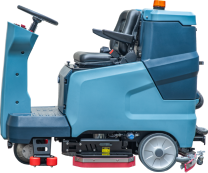
Hotel cleaning equipment should support quiet operation, fast visual recovery, organized housekeeping routes and guest-area safety. Lobbies and corridors may need scrubber dryers or vacuums, while guest floors depend on housekeeping trolleys, separated tools, waste handling, consumables and storage discipline.
| Hotel zone | Equipment layer | Planning reason |
|---|---|---|
| Lobby | Low-noise floor care and fast spot cleaning | Guest traffic and appearance matter. |
| Guest corridors | Vacuum, compact scrubber or trolley support | Routes must avoid disturbance. |
| Guest rooms | Housekeeping trolley and detail tools | Supplies and waste handling must be organized. |
| Restrooms | Separated tools and consumables | Hygiene and odor control are visible. |
| Back-of-house | Durable tools and service route planning | Staff efficiency affects guest-facing areas. |
Separate guest-facing and back-of-house needs
A hotel lobby needs quiet, presentable cleaning that restores appearance quickly. Back-of-house areas often need more durable tools and different route timing.
Using the same equipment plan for both areas can create poor guest experience or inefficient staff movement.
Use trolleys as workflow tools
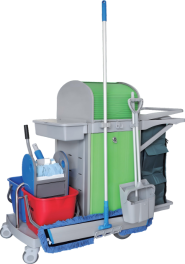
A housekeeping trolley should match linen, amenities, waste collection, room supplies, chemical storage and tool separation. It is part of the daily workflow, not only a storage cart.
The trolley should fit elevators, corridors, storage rooms and guest-floor routes without blocking traffic.
Choose low-disruption floor care for public spaces
Hotel public areas often require low noise, fast drying and clean appearance during or near business hours. This can favor compact scrubber dryers, vacuums and spot-cleaning tools.
The cleaning plan should define when wet cleaning is allowed and how operators signal temporary wet floors.
Keep consumables visible and easy to restock
Housekeeping delays often come from missing consumables rather than machine failure. Trolley layout should make towels, bags, restroom supplies and cleaning cloths easy to count and restock.
A standard route list helps supervisors check whether each trolley starts the shift with the correct supplies.
Use separate tools for restrooms and room surfaces
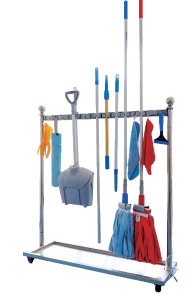
Hotels should avoid tool mixing between restrooms, room surfaces and public areas. Color coding or clearly separated storage positions can reduce mistakes.
This separation should be simple enough for rotating staff and contractors to follow without a long explanation.
Connect equipment choice to brand experience
In hospitality, cleaning equipment affects noise, visibility, odor, floor appearance and staff movement. These details influence guest perception.
A good equipment plan supports cleanliness while keeping the cleaning process controlled, quiet and predictable.
Limitations and checks before purchase
- Hotel cleaning schedules should follow property rules, guest traffic and safety procedures.
- Carpeted areas may need separate vacuum or carpet-care planning.
- Wet cleaning in guest-facing areas should include drying checks and warning procedures.
Traceable evidence
Sources and evidence boundaries
These sources separate ELEREIN-published facts from neutral methods, safety guidance and regulatory context.
- Supports
- Wet-floor, drying, pedestrian-control and cleaning-process factors relevant to route planning.
- Boundary
- The guidance does not define a universal drying time or approve a machine-floor combination.
- Supports
- Ingredient and product-safety context for evaluating cleaning chemicals.
- Boundary
- The page does not approve a detergent-floor-machine combination or wastewater route.
- Supports
- Clean-cart organization and separation principles for environmental-service teams.
- Boundary
- Exact cart contents, zoning and procedures remain facility-specific.
How to use these sources: Use each source only for the safety, testing, regulatory or procurement principle stated in its boundary. External sources do not certify, endorse or validate an untested ELEREIN model.
Official product context