

What is a floor scrubber used for?
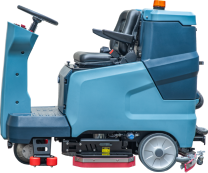
A floor scrubber is used for wet cleaning hard floors by applying solution, scrubbing the surface and recovering wastewater. It is commonly used in warehouses, factories, malls, schools, hospitals and transport facilities.
When should I choose a ride-on floor scrubber?
Choose a ride-on scrubber when the site has large open areas, long cleaning routes and enough turning space. It is usually better for warehouses, airports, parking areas and large factories.
When is a walk-behind scrubber better?
A walk-behind scrubber is better for smaller areas, narrow aisles, frequent turns and sites where storage space is limited. It is often easier for new operators to control.
What parameters matter most?
Cleaning width, squeegee width, solution tank, recovery tank, battery runtime, noise level, gradeability and turning radius are the first parameters to check.
Why does a scrubber leave water streaks?
Common reasons include worn squeegee rubber, blocked vacuum hose, poor tank sealing, incorrect squeegee angle or debris under the rubber edge.
Can one scrubber clean every floor?
No. Floor type, soil level, water sensitivity, slope and obstacles all affect selection. Some dry dust areas need sweeping before wet scrubbing.
How often should squeegee rubber be replaced?
Replacement depends on floor roughness and usage frequency. Inspect it daily and replace it when it is cut, curled, hardened or leaving visible streaks.
What should buyers ask before ordering?
Ask for the route recommendation, parameter table, spare-part list, consumables, warranty scope, manual and expected maintenance routine.
Why does a floor scrubber have weak suction?
Weak suction is often caused by a blocked hose, loose recovery tank seal, dirty filter, damaged squeegee rubber or air leakage in the recovery path. Check these visible items before assuming the vacuum motor has failed.
Why does the brush disc stop spinning?
A brush disc may stop because of overload, tangled debris, incorrect brush installation, low battery, wiring protection or a drive-system fault. Stop the machine safely and inspect debris and installation first.
Why is water flow too small or not coming out?
Low water flow can come from an empty tank, blocked filter, closed valve, clogged hose, clogged outlet or unsuitable detergent residue. Clean the water path before changing major parts.
What daily maintenance should operators follow?
After each shift, drain and rinse tanks, clean the squeegee, remove debris from brushes or pads, check hoses and filters, recharge batteries correctly and record visible wear.