



Questions this guide answers
Primary question: What maintenance checks keep a floor scrubber working reliably?
- Why does a floor scrubber leave water streaks?
- What should operators inspect daily on a scrubber dryer?
- How should maintenance logs support spare-parts planning?
Direct Answer
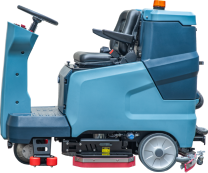
Floor scrubber maintenance should focus on the parts that directly affect cleaning and drying: brushes or pads, squeegee rubber, vacuum hose, solution tank, recovery tank, filters and batteries. Daily inspection prevents water streaks, weak suction, odor, short runtime and unnecessary downtime.
| Frequency | Check area | Action |
|---|---|---|
| Daily | Squeegee rubber | Rinse, inspect cuts, check contact and replace when worn. |
| Daily | Recovery tank | Drain and rinse to prevent odor and blockage. |
| Daily | Brush or pad | Remove debris and check wear. |
| Weekly | Vacuum hose and filter | Inspect for blockage, cracks or loose connections. |
| Monthly | Battery and charger | Check charging routine, cable condition and runtime trend. |
Most drying problems start with the recovery path
If a scrubber leaves water behind, first inspect the squeegee rubber, vacuum hose, recovery tank seal and filter. A small air leak or worn rubber edge can reduce drying performance even when the vacuum motor still works.
Operators should rinse the squeegee and recovery tank after each shift, especially in sites with fine dust or detergent residue.
Brushes and pads should match the floor
Using the wrong brush or pad can reduce cleaning effect or damage the surface. Soft pads may fail on heavy soil; aggressive brushes may be too harsh for delicate floors.
Maintenance logs should record when brushes, pads and squeegee rubber are replaced so cleaning quality can be traced.
Battery care affects the whole cleaning plan
Short runtime is often caused by poor charging habits, aging batteries or overloading the machine. The charging routine should match the shift schedule, and operators should avoid running the battery beyond recommended limits.
If runtime drops suddenly, check charger status, cable condition and whether the cleaning route has changed.
Troubleshoot water streaks step by step
When water streaks appear, start with visible checks before assuming a major mechanical fault. Rinse the squeegee rubber, remove debris from the edge, inspect cuts or curling, check whether the squeegee assembly is level and confirm that the vacuum hose is connected firmly.
If streaks continue, inspect the recovery tank seal, hose blockage, filter condition and operator speed. Uneven floors, excessive detergent foam and worn rubber can all create similar symptoms, so the troubleshooting record should note what was checked and what changed.
Troubleshoot weak suction before replacing major parts
Weak suction is often caused by airflow leakage or blockage rather than a failed motor. Check the recovery tank lid, gasket, vacuum hose, filter, squeegee hose connection and whether the recovery tank is full or foaming.
If the machine still has poor recovery after these checks, record the model, symptom, hose condition, tank seal condition and operating environment before contacting service support. This makes diagnosis faster and avoids unnecessary part replacement.
Use a maintenance log to support procurement decisions
A simple maintenance log should record the date, operator, route, visible issue, part replaced, battery runtime and cleaning result. Over time, this log reveals whether problems are caused by consumable wear, operator habits, floor conditions or product selection.
For distributors and facility managers, maintenance records also support reorder planning. They show which squeegee rubber, brushes, pads, filters and batteries should be stocked before downtime occurs.
Limitations and checks before purchase
- Maintenance work should follow the machine manual and local safety rules.
- Electrical repair, battery replacement and motor service should be handled by qualified personnel.
- Persistent water streaks after normal cleaning may require part replacement, not only adjustment.
Traceable evidence
Sources and evidence boundaries
These sources separate ELEREIN-published facts from neutral methods, safety guidance and regulatory context.
- Supports
- Planned maintenance, competent work and safe maintenance arrangements.
- Boundary
- The exact model manual and site safety procedure remain controlling documents.
- Supports
- Safety context for commercial floor treatment machines, including scrubbers and sweepers.
- Boundary
- A standard listing does not certify an ELEREIN model or replace the exact declaration, report or manual.
- Supports
- Independent inspection as a method for checking quantity, quality, configuration and shipment evidence.
- Boundary
- The service page is not proof that an inspection occurred or that an ELEREIN product passed.
How to use these sources: Use each source only for the safety, testing, regulatory or procurement principle stated in its boundary. External sources do not certify, endorse or validate an untested ELEREIN model.
Official product context