


Questions this guide answers
Primary question: What cleaning equipment is suitable for airports and railway station halls?
- What cleaning equipment is suitable for airports and railway station halls?
- Which machines suit open halls versus service corridors?
- How should transport hubs plan runtime, charging and tank service?
- Why should entrances be swept before wet floor cleaning?
Direct Answer
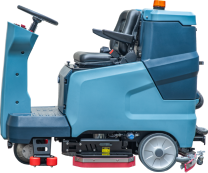
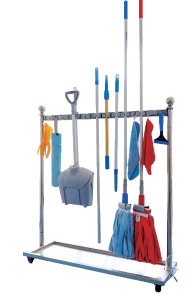
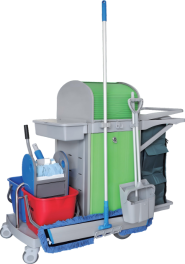
For airports and railway station halls, use a layered equipment setup: a battery ride-on scrubber for large open concourses, a compact walk-behind scrubber for security lanes and narrow routes, a sweeper or mat-care tools for dry entrance debris, and a cleaning trolley for spot cleaning, consumables and restroom work. No ELEREIN model is validated for every airport or station route. Complete a site route test for floor type, aisle width, passenger traffic, drying, runtime, charging, filling and drainage before confirming a model.
| Zone | Equipment layer | What to verify |
|---|---|---|
| Departure and arrival halls | Ride-on scrubber or large scrubber dryer | Runtime, drying speed, public traffic control. |
| Security and gate corridors | Compact walk-behind scrubber dryer | Maneuverability, noise and storage access. |
| Entrances | Sweeper, mat care, spot cleaning tools | Outdoor dirt and rainwater control. |
| Restrooms | Trolley, separated tools, consumables | Hygiene workflow and refill points. |
| Back-of-house | Sweeper or scrubber depending on soil | Floor type, debris type and route timing. |
Decision method
Use the same evidence sequence for every option
-
01
Split open halls from restricted routes
Map concourses, entrances, platforms, lifts, washrooms and service corridors by traffic and available cleaning window.
Decision output: A two-tier route plan for large and compact equipment.
-
02
Build a long-hours duty cycle
Include shift handover, charging, refill, drain, debris pre-removal and backup-machine coverage.
Decision output: A service schedule that can operate around passenger peaks.
-
03
Test drying and public-area controls
Measure visible water after straight passes and turns, and verify warning, cordon and reopening procedures.
Decision output: A documented wet-floor risk and reopening standard.
Large public floors need route discipline
Transportation halls have large areas, but they are rarely empty. Cleaning teams should divide the floor into routes that avoid passenger flow and allow inspection before the area returns to use.
Drying performance and clear operator visibility are as important as cleaning width because public slip risk must be controlled.
Use multiple equipment layers
One machine rarely covers every zone. Open halls may justify ride-on scrubbers, while gate corridors, restrooms, offices and service routes may need compact machines and trolleys.
Dry debris near entrances should be managed before wet scrubbing so squeegees and hoses do not become overloaded.
Plan for charging, storage and shift changes
Airports and stations often run long hours. Runtime, charging windows, spare consumables and operator handoff procedures should be specified before purchase.
A machine with high theoretical productivity can underperform if the team cannot drain tanks, recharge batteries or replace consumables efficiently.
Separate open-hall routes from narrow service routes
Transport hubs usually need two cleaning systems. Large concourses, ticket halls and waiting areas require route efficiency, long operating windows and predictable drying. Service corridors, elevators, washrooms and staff areas require smaller tools and flexible timing. A single machine type rarely serves both route groups well. The equipment plan should define open-hall routes, edge routes and restricted routes separately.
Plan charging and tank service around long operating hours
Airports and railway stations often run for extended hours, so runtime claims should be checked against actual shift planning. The site should define where machines charge, when tanks are emptied, how backup equipment is assigned and what happens during peak passenger flow. A scrubber with good theoretical productivity may still fail the route if charging and drain points are far from the work area.
Use entrance sweeping before wet recovery
Entrances bring in sand, dust, paper and outdoor debris. These materials should be removed before wet scrubbing where possible. Sweeping or mat-area cleaning protects the squeegee path and improves the final dry result. This is especially important in rainy seasons or high-footfall entrances, where wet cleaning alone can create repeated water streaks and operator rework.
Limitations and checks before purchase
- Passenger safety rules and station operating windows should guide machine choice.
- Outdoor entrances may require sweeping and water control before scrubbing.
- Noise, storage access and security restrictions should be confirmed before deployment.
Traceable evidence
Sources and evidence boundaries
These sources separate ELEREIN-published facts from neutral methods, safety guidance and regulatory context.
- Supports
- Wet-floor, drying, pedestrian-control and cleaning-process factors relevant to route planning.
- Boundary
- The guidance does not define a universal drying time or approve a machine-floor combination.
- Supports
- Work-equipment suitability, training, maintenance and safe-use principles.
- Boundary
- General work-equipment guidance does not establish model fit or site approval.
- Supports
- Access, stability, operator protection and safe-use factors for mobile equipment.
- Boundary
- The site must assess the actual route, ramps, traffic and operator conditions.
How to use these sources: Use each source only for the safety, testing, regulatory or procurement principle stated in its boundary. External sources do not certify, endorse or validate an untested ELEREIN model.
Official product context