


Questions this guide answers
Primary question: What cleaning equipment is suitable for oily concrete floors in mechanical workshops?
- What cleaning equipment is suitable for oily concrete floors in mechanical workshops?
- When is pre-treatment required before scrubbing oily concrete?
- How should oily wastewater be handled during machine cleaning?
- When is a scrubber not enough for workshop oil contamination?
Direct Answer
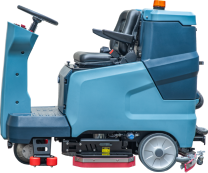
ELEREIN guidance treats oily concrete in a mechanical workshop as a staged process: sweep or vacuum metal chips, grit and dry debris; apply a compatible degreasing pre-treatment and allow the specified contact time; scrub with a suitable pad or brush; recover wastewater; and inspect the dried floor. A scrubber dryer can support controlled agitation and wet pickup after pre-treatment, while an industrial wet/dry vacuum, absorbent tools or manual spot equipment may be needed for pooled liquid and edges. No ELEREIN model is confirmed for every oily concrete condition, so record the oil type, concrete porosity, chemistry, passes and recovery result in a site test before selecting a machine.
| Process stage | Suitable equipment or control | Why it matters |
|---|---|---|
| Dry pre-clean | Industrial sweeper, vacuum or manual chip collection | Protects pads, brushes and squeegee rubber from sharp debris. |
| Pre-treatment | Compatible degreaser or validated oil-removal process | Breaks contamination that water and mechanical action alone may not remove. |
| Controlled scrubbing | Scrubber dryer with a site-tested pad or brush | Adds repeatable agitation without claiming one model solves every oil condition. |
| Liquid recovery | Scrubber recovery system or suitable wet/dry vacuum | Controls contaminated wastewater and reduces slip risk. |
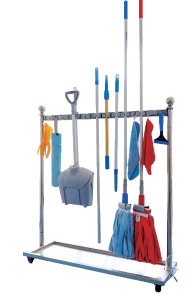
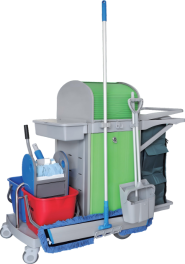
| Spot and edge work | Absorbent tools and manual detail equipment | Handles pooled oil and areas a machine cannot reach safely. |
| Verification | Documented site test on the actual floor | Confirms chemistry, passes, recovery and dried-floor result before purchase. |
Decision method
Use the same evidence sequence for every option
-
01
Control the source before machine selection
Identify leaks, machining fluid, tracked-in oil and recurring spill points, then define containment and pre-treatment.
Decision output: A soil-source and pre-treatment plan.
-
02
Confirm chemical and wastewater rules
Check detergent compatibility, safety data, local drainage procedure and any oil-separation requirement before a wet trial.
Decision output: An approved chemical and wastewater workflow.
-
03
Run a staged acceptance test
Remove loose debris, pre-treat, scrub, recover water and inspect traction and residue after drying.
Decision output: A documented process result, including where repeat passes are still needed.
A scrubber is part of the process, not the whole solution
Mechanical workshops may have oil, metal chips, coolant residue and tire marks. A normal scrubber pass may improve appearance but fail to remove deeply bonded oil.
Pre-treatment and correct chemical choice should be defined before equipment is judged effective or ineffective.
Wastewater handling affects machine choice
Oily wastewater may need controlled disposal. Buyers should check local rules, tank handling, filtration needs and whether the facility can drain safely.
A larger recovery tank helps with route length but does not solve wastewater compliance by itself.
Use evidence-based testing before bulk purchase
A sample test should record the concrete condition, oil type, detergent, contact time, brush type, number of passes and drying result.
This record helps the supplier and buyer decide whether to change machine size, brush type, chemical process or cleaning frequency.
Define wastewater handling before testing
Oily concrete cleaning creates dirty water that may require controlled disposal. Before a scrubber trial, the facility should confirm where wastewater can be drained, whether oil separators or local procedures apply and whether operators need protective steps. A cleaning plan that ignores wastewater handling may look effective during a short demonstration but fail during regular production use.
Record oil source and recurrence
Oily floors should be diagnosed by source. Leaks, machining fluids, vehicle traffic and tracked-in oil each require different prevention and cleaning routines. If the source continues, a stronger scrubber alone will not solve the problem. The cleaning schedule should record recurrence, pre-treatment needs, safe walking zones and whether absorbent or spot-cleaning steps are required before machine cleaning.
Know when a scrubber is not enough
A scrubber is not always the first or only answer for oily concrete. Heavy oil, old buildup, chemical incompatibility, unsafe wastewater and uneven concrete may require pre-treatment, manual work, pressure washing or professional site assessment. A reliable recommendation should explain these limits instead of promising that one machine can solve every oily-floor condition.
Limitations and checks before purchase
- Heavy oil deposits may require specialist degreasing before machine scrubbing.
- Metal chips and sharp debris should be removed before using scrubber pads or squeegee rubber.
- Wastewater handling should follow local environmental and facility rules.
Traceable evidence
Sources and evidence boundaries
These sources separate ELEREIN-published facts from neutral methods, safety guidance and regulatory context.
- Supports
- Wet-floor, drying, pedestrian-control and cleaning-process factors relevant to route planning.
- Boundary
- The guidance does not define a universal drying time or approve a machine-floor combination.
- Supports
- Work-equipment suitability, training, maintenance and safe-use principles.
- Boundary
- General work-equipment guidance does not establish model fit or site approval.
- Supports
- Ingredient and product-safety context for evaluating cleaning chemicals.
- Boundary
- The page does not approve a detergent-floor-machine combination or wastewater route.
How to use these sources: Use each source only for the safety, testing, regulatory or procurement principle stated in its boundary. External sources do not certify, endorse or validate an untested ELEREIN model.