


Questions this guide answers
Primary question: How should operators troubleshoot squeegee and water recovery problems on scrubber dryers?
- Why does a scrubber dryer leave streaks or wet edges?
- Which recovery path checks should operators perform first?
- When is the issue caused by floor condition or operator speed?
Direct Answer
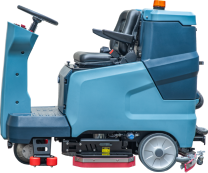
When a scrubber dryer leaves streaks or wet edges, start with the recovery path: squeegee rubber, debris under the blade, squeegee angle, hose blockage, tank seal, filter condition and operator speed. Most water recovery issues should be checked in this order before assuming the vacuum motor has failed.
| Symptom | First checks | Why it matters |
|---|---|---|
| Center streak | Check blade wear, debris and angle | Poor contact leaves visible water lines. |
| Wet edges | Check turning speed and side blade contact | Edges often fail during turns. |
| Weak suction | Check hose, tank lid seal and filter | Air leakage reduces recovery. |
| Foam in tank | Check detergent type and residue | Foam can reduce vacuum recovery. |
| Repeated failure | Record route, floor and part condition | Patterns reveal wear or process issues. |
Inspect the squeegee before deeper repair
The squeegee is a wear part, so it should be inspected before major components are blamed. Cuts, curling, hardened rubber and debris under the edge can all leave water behind.
Operators should clean the blade after each shift and check whether it contacts the floor evenly across the full width.
Check the full recovery airflow path
Weak recovery can come from the hose, tank lid, gasket, filter or recovery tank level. A small air leak can make the machine look underpowered.
The inspection should follow the water and air path from the floor to the recovery tank so the team does not replace parts in the wrong order.
Match speed and turns to drying quality
Moving too quickly or turning sharply can lift the squeegee edge and leave wet trails. This can happen even when the rubber is new.
Training should include a normal cleaning speed, turn behavior and a check at the end of each route so wet areas are corrected before traffic returns.
Control detergent and foam
Excess detergent or incompatible chemical residue can create foam in the recovery tank. Foam reduces recovery and can cause confusing symptoms.
Operators should use compatible detergent, correct dilution and defoaming guidance where the manual requires it. The cleaning record should note chemical changes.
Use floor condition in diagnosis
Uneven concrete, damaged tile, slopes and drains can all affect water recovery. A machine may perform well on one area but leave residue at edges or dips.
A route note should identify floor defects separately from machine defects so the buyer can decide whether adjustment, repair or a different route is needed.
Turn troubleshooting into a support record
A good support record includes model, squeegee condition, hose condition, detergent used, floor type, route speed and photos of the streak pattern.
This helps suppliers, distributors and service teams diagnose whether the issue is a consumable, operator habit, floor condition or mechanical fault.
Limitations and checks before purchase
- Electrical and vacuum-motor repair should be handled by qualified service personnel.
- Wet-floor safety procedures should be followed whenever recovery performance is uncertain.
- Squeegee replacement intervals depend on floor roughness, usage and storage habits.
Traceable evidence
Sources and evidence boundaries
These sources separate ELEREIN-published facts from neutral methods, safety guidance and regulatory context.
- Supports
- Wet-floor, drying, pedestrian-control and cleaning-process factors relevant to route planning.
- Boundary
- The guidance does not define a universal drying time or approve a machine-floor combination.
- Supports
- Planned maintenance, competent work and safe maintenance arrangements.
- Boundary
- The exact model manual and site safety procedure remain controlling documents.
- Supports
- Repeatable performance and safety testing context for cleaning equipment.
- Boundary
- A laboratory service page is not a model-level report or certification.
How to use these sources: Use each source only for the safety, testing, regulatory or procurement principle stated in its boundary. External sources do not certify, endorse or validate an untested ELEREIN model.
Official product context