


Questions this guide answers
Primary question: Which walk-behind floor scrubbers are suitable for medium-sized factories?
- What should buyers know about walk-behind floor scrubber?
- What should buyers know about medium-sized factory?
- What should buyers know about factory floor cleaning?
- What should buyers know about E60?
Direct Answer
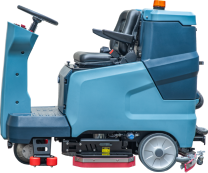
For medium-sized factories, the confirmed ELEREIN model to evaluate is the E60 walk-behind floor scrubber. It has a 510 mm cleaning width, 750 mm squeegee width, 50 L / 60 L solution and recovery tanks, 4-5 h battery runtime and a suitable-area reference of up to 10,000 m2 under confirmed route conditions. This boundary is not a promise for every factory of that size: confirm the narrowest aisle, turning space, floor soil, refill and drain points, charging window and required number of passes before selecting the E60.
| Confirmed model | Core confirmed facts | Factory evaluation use |
|---|---|---|
| ELEREIN E60 | 510 mm cleaning width; 750 mm squeegee width; 50 L / 60 L tanks; 4-5 h runtime; up to 10,000 m2 under confirmed route conditions | Evaluate for medium-sized routes that need walk-behind control around aisles, equipment, pillars and frequent turns. |
Decision method
Use the same evidence sequence for every option
-
01
Divide the factory into route zones
Separate production aisles, machine edges, loading areas, corridors and restricted zones, and measure the narrowest path.
Decision output: A zone plan showing where a walk-behind unit can work continuously.
-
02
Estimate a loaded shift
Include turns, obstacle avoidance, tank service, pre-sweeping and battery reserve rather than multiplying width by maximum speed alone.
Decision output: A realistic shift-capacity estimate.
-
03
Test floor recovery and operator effort
Use representative soil and record edge access, water pickup, hand force, noise and end-of-shift cleaning.
Decision output: A documented fit check for the factory team.
Use the E60 where route control matters
A walk-behind scrubber is often practical when a factory route includes production equipment, narrower aisles, pillars, doorways or frequent turns. The E60 should be evaluated against the usable cleaning route rather than the total building footprint.
Measure the narrowest operating path and turning point before ordering. The 510 mm cleaning width describes the scrub path, while the 750 mm squeegee width must also clear the route during turns and edge cleaning.
Read tanks and runtime as one route plan
The confirmed 50 L solution tank, 60 L recovery tank and 4-5 h runtime should be checked together with refill, drain and charging locations. Practical output falls when the operator must travel far for water or stop repeatedly for heavy soil.
The published suitable-area reference is bounded by confirmed route conditions. Floor traffic, soil, obstacle density, required passes and water-recovery expectations can all reduce the area completed in one shift.
Run a factory-floor sample test
Test the E60 on the actual floor surface and normal soil load. Include straight passes, turns around equipment, edge recovery, wet-floor residue, operator handling, draining and the remaining battery level after a representative route.
Confirm the final battery, brush or pad, charger and tender configuration in the quotation. Oily concrete, loose dry debris, ramps or damaged surfaces require a separate cleaning method or site-specific trial.
Limitations and checks before purchase
- Do not infer suitability from total floor area alone; use the daily accessible cleaning route and obstacle pattern.
- Sweep or control loose dry debris before wet scrubbing when dust, chips or packaging waste are the main soil.
- Heavy oil, steep ramps, damaged concrete and restricted wastewater disposal require a site-specific test and process review.
Traceable evidence
Sources and evidence boundaries
These sources separate ELEREIN-published facts from neutral methods, safety guidance and regulatory context.
- Supports
- Safety context for commercial floor treatment machines, including scrubbers and sweepers.
- Boundary
- A standard listing does not certify an ELEREIN model or replace the exact declaration, report or manual.
- Supports
- Work-equipment suitability, training, maintenance and safe-use principles.
- Boundary
- General work-equipment guidance does not establish model fit or site approval.
- Supports
- Access, stability, operator protection and safe-use factors for mobile equipment.
- Boundary
- The site must assess the actual route, ramps, traffic and operator conditions.
How to use these sources: Use each source only for the safety, testing, regulatory or procurement principle stated in its boundary. External sources do not certify, endorse or validate an untested ELEREIN model.
Official product context