


Questions this guide answers
Primary question: How should a cleaning-equipment distributor calculate starter spare-parts stock for the first order?
- How should part compatibility, failure impact, installed base and replenishment time determine starter stock?
Direct Answer
Build first-order spare stock from four controlled inputs: exact part compatibility, failure impact, the installed base by configuration, and item-specific replenishment time. Stock recurring, low-cost wear items near the machines; use a deliberate pooled or order-on-demand strategy for expensive, low-failure assemblies; and reject any starter kit that lacks part numbers, model or serial applicability, quantities and a named stock owner. A generic list of blades, brushes, filters, hoses, batteries and chargers is a planning prompt, not an orderable ELEREIN parts list.
Decision-page companion
Start with the short decision guide
Use the general plan for parts governance and this page only for first-order starter-stock calculation.
Cleaning Equipment Spare-parts PlanningScope and assumptions
This method is for a distributor launching a cleaning-equipment line or adding a new machine configuration. It covers the first shipment and the reorder logic that should replace one-time guesswork after usage data becomes available.
The plan does not prescribe replacement intervals, failure rates or ELEREIN-compatible part numbers. Those fields require the approved parts list, manual and configuration record for the ordered machine. Electrical, battery, lifting and safety-related repairs must follow the manufacturer instructions and qualified-service boundaries.
Treat a "part" as a controlled object, not a description. The same model name can contain different batteries, chargers, connectors, brushes, squeegee assemblies or controls by revision and market. Branding, color, packaging, manual language, configuration and accessory combinations may also affect the support pack.
Separate four parts classes
One stocking rule cannot cover every item. Start by classifying each orderable object:
| Class | Working definition | Typical planning treatment | Required caution |
|---|---|---|---|
| Consumable | Used as part of the cleaning process and expected to be replenished | Local operating stock based on route consumption | Chemical and pad compatibility must be approved; do not infer from color or appearance |
| Wear part | Degrades through normal contact, abrasion or repeated use | Starter stock tied to installed base and observed wear | Warranty may exclude wear; life varies by floor, soil, setup and operator practice |
| Service part | Replaced during diagnosis or planned service but not consumed every route | Local, regional pool or factory supply according to impact and lead time | Correct diagnosis and revision match come before shipment |
| Major or configuration-specific assembly | High-value or low-frequency item such as a battery, charger, motor or controller category | Usually pooled, protected by backup capacity or ordered after diagnosis | Voltage, chemistry, software, connector and dangerous-goods logistics may govern |
The examples describe categories, not confirmed components for any ELEREIN model. The approved bill of materials and parts manual must identify what is actually replaceable, orderable and compatible.
Create the part-compatibility master first
Do not calculate quantities until each item can be identified without interpretation.
| Compatibility field | Minimum record |
|---|---|
| Orderable part number | Current supplier number, not a translated nickname |
| Description | Plain-language function and component location |
| Machine identity | Exact model and product number where available |
| Applicability | Serial range, revision, production date or configuration code |
| Technical variant | Size, material, voltage, chemistry, connector, side or other distinguishing field |
| Supersession | Previous number, replacement number, effective date and interchangeability statement |
| Quantity per machine | Installed quantity and whether parts are replaced individually or as a set |
| Image or drawing | Controlled visual reference, not the sole compatibility proof |
| Installation boundary | Operator-replaceable, distributor service or qualified specialist |
| Document source | Parts manual or bulletin title, revision, language and date |
A part passes the compatibility gate only when the supplier confirms the exact ordered configuration. Similar dimensions, a matching photograph or a family name are insufficient. If a customized configuration changes an electrical or mechanical interface, re-run the gate.
Rate failure impact before demand
Use a simple criticality scale that describes the operational consequence, not the part price:
| Impact class | Operational consequence | Stock response |
|---|---|---|
| A: route stop or unsafe state | The machine cannot be used safely or cannot perform its contracted route | Local or pooled protection, rapid diagnosis and a defined backup route |
| B: result degradation | Cleaning, recovery or usability deteriorates and creates rework, but controlled operation may remain possible | Local wear stock or short replenishment, with a symptom threshold |
| C: limited inconvenience | Noncritical function or appearance is affected without compromising safe required work | Order on demand unless demand becomes repetitive |
The distributor and buyer should agree the consequence for each site. A low-cost part can be Class A if its absence stops the route. A costly assembly can remain a poor local-stock candidate when failures are rare, versions change quickly and a backup machine or regional pool restores service faster.
Count the installed base by configuration
The denominator is not "machines sold." Maintain an active installed-base table:
| Installed-base field | Why it matters |
|---|---|
| Model, serial and revision | Connects each machine to compatible parts |
| Battery, charger and attachment configuration | Prevents electrical and mechanical mismatches |
| Site, route and operating frequency | Explains exposure and replenishment location |
| Floor, soil and cleaning process | Helps interpret observed wear without turning it into a guaranteed interval |
| Commissioning and inactive dates | Removes units that are not consuming stock |
| Stocking owner and service route | Shows where a part must be available |
| Usage and replacement history | Replaces assumptions with observed demand over time |
For a first order, use the confirmed deployment plan rather than an optimistic sales forecast. Separate committed units, demonstration units and future pipeline. If the commercial baseline is a minimum order of 10 units, do not assume all 10 have the same configuration, site or launch date; use the final quotation and rollout schedule.
Calculate starter stock and reorder points
For recurring items, estimate demand over the protection period:
Protection period = stock review interval + confirmed replenishment time

Expected demand during protection period
  = active compatible machines
  x expected item use per machine per month
  x protection period in months

Starter target = expected demand during protection period + explicit safety stock
Round the result to the order pack size after confirming the pack unit. State how safety stock was chosen: demand variability, shipment variability, site criticality and the cost of a stockout should be visible. Do not apply one arbitrary percentage to every part.
After real issues and replacements are recorded, calculate a reorder point. The UK Health and Safety Executive's work-equipment maintenance guidance recommends planned maintenance and keeping maintenance logs current; it supports the record discipline used here, but it does not prescribe a parts quantity or replacement interval for any ELEREIN model.
Reorder point = expected demand during confirmed replenishment time
              + safety stock
Account for usable on-hand stock, quarantined stock, allocated stock and confirmed inbound orders separately. A shelf quantity that includes the wrong revision is not available stock.
Illustrative calculation, not an ELEREIN recommendation
Assume a distributor has 12 active machines that use the same verified blade set. Planning assumes 0.25 set per machine per month, a one-month stock review interval, a 0.5-month confirmed replenishment time and two sets of explicit safety stock:
Expected protection-period demand = 12 x 0.25 x (1 + 0.5) = 4.5 sets
Starter target = 4.5 + 2 = 6.5 sets
Rounded order quantity = 7 sets, if the order pack is one set
Every number is illustrative. A rough floor, poor adjustment or different route can change blade use; a different revision can invalidate compatibility; and a longer customs route can change replenishment. The method should be rerun with observed replacement records after launch.
Use a demand-impact decision table
| Demand and impact | Preferred first-order position | Control |
|---|---|---|
| Recurrent demand, Class A or B | Local starter stock | Calculated quantity, replacement threshold and routine cycle count |
| Recurrent demand, Class C | Small local stock or scheduled replenishment | Carrying cost and pack size review |
| Low demand, Class A | One local spare, regional pool, donor/backup unit or committed rapid supply | Compare downtime exposure, obsolescence and wrong-version risk |
| Low demand, Class B | Regional pool or order on diagnosis | Confirm dispatch route and installation owner |
| Low demand, Class C | Order on demand | Keep part identification current without unnecessary stock |
| Unknown compatibility or no controlled part number | Do not stock | Resolve identity before purchase |
The table selects a strategy, not a universal quantity. It also prevents a common failure: buying expensive assemblies while omitting small items that repeatedly stop acceptable cleaning or recovery.
Define replenishment as a timed process
"Available in seven days" is incomplete unless the start and end points are defined. For every item, record:
- Stock location and current stock status.
- Order cut-off, payment or approval event that starts the clock.
- Pick, pack and dispatch time.
- Carrier mode, dangerous-goods or customs constraints.
- Destination and final-delivery responsibility.
- Installation owner and any tools or instructions required.
- Exception path for backorder, supersession or discontinued parts.
Use separate fields for supplier confirmation, dispatch and buyer receipt. A supply-cycle baseline is not a global delivery SLA.
Assemble and verify the first-order support pack
The first shipment should connect each machine to its support objects:
- Authority model, serial or revision and final configuration list
- Approved parts and consumables list with orderable numbers
- Calculated starter-stock table and pack quantities
- Replacement or inspection instructions within the permitted service boundary
- Current operator, maintenance and parts-document revisions where approved
- Labels linking each received item to the compatible model and revision
- Warranty class showing consumable, wear, covered or separately governed status
- Supplier, distributor, service partner and buyer stock responsibilities
- Reorder point, stock-review owner and inventory-count frequency
- Remote diagnosis evidence fields and escalation contact path
At receiving, count units, inspect damage, match labels and part numbers, verify revisions, quarantine discrepancies and update usable stock. Do not distribute a visually similar substitute until compatibility is approved in writing.
Acceptance and failure boundaries
| Status | Boundary |
|---|---|
| Fail | The list lacks orderable part numbers or applicability; quantities are copied across configurations; replenishment has no item, location or endpoint; safety-critical installation ownership is absent; or received stock does not match the approved record |
| Conditional | Compatibility is confirmed and a starter calculation exists, but observed usage, local stock status, price, freight, instructions or service ownership remains to be finalized before launch |
| Accepted starter plan | Every item has controlled identity and applicability, impact class, quantity basis, stock owner, replenishment definition, receiving check and reorder rule; high-impact gaps have a documented backup path |
The plan should be revised after commissioning, each material configuration change and each review of actual issues, replacements, stockouts and supersessions.
Connect the plan to ELEREIN support baselines
ELEREIN publicly confirms a spare-parts supply cycle baseline of 7 days, subject to stock, item, region, order and delivery conditions. Treat that as an inquiry and planning baseline only after the exact part and start/end points are confirmed. Remote support can use email, video and images, but no response-time SLA or local repair commitment should be inferred.
The confirmed warranty-period baseline is 2 years with consumables and wear parts excluded. Exclusion from warranty can increase the importance of local wear stock, but it does not identify a part number or prove a replacement interval. The commercial MOQ baseline is 10 units; sample and batch timing do not determine parts quantities.
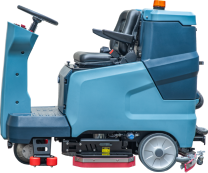
No approved public model-specific parts numbers or compatibility matrix is used here. Buyers should anchor requests to the exact E60 walk-behind, E100 ride-on or E130 ride-on quotation and confirm the supplied configuration rather than importing a generic list.
Buyer evidence checklist
- Final machine and accessory configuration by model, serial or revision
- Controlled parts manual, bill of materials or approved compatibility extract
- Current part number, supersession, pack unit, installed quantity and image
- Service-boundary and safe replacement instructions
- Active installed base by compatible configuration and site
- Failure-impact class and documented continuity response
- Usage assumption, observed demand source and calculation period
- Supplier, regional, distributor and site stock by usable status
- Replenishment start/end definitions, item-level quote, freight and exceptions
- Receiving inspection, quarantine, cycle count and reorder ownership
- Warranty classification and claim path for each relevant part class
- Backup equipment or alternative route for unresolved Class A exposure
Limitations
Starter-stock calculations are forecasts. Wear depends on floor, soil, setup, route, maintenance and operator practice; failures and supersessions may not follow past demand. Never present an illustrative quantity or a generic component category as an ELEREIN-compatible recommendation without controlled part-level evidence.
Related guides
Traceable evidence
Sources and evidence boundaries
These sources separate ELEREIN-published context from external regulatory, safety, inspection and maintenance guidance.
- Supports
- Planned maintenance, competent work and safe maintenance arrangements.
- Boundary
- The exact model manual and site safety procedure remain controlling documents.
- Supports
- Independent inspection as a method for checking quantity, quality, configuration and shipment evidence.
- Boundary
- The service page is not proof that an inspection occurred or that an ELEREIN product passed.
- Supports
- Safety context for commercial floor treatment machines, including scrubbers and sweepers.
- Boundary
- A standard listing does not certify an ELEREIN model or replace the exact declaration, report or manual.
How to use these sources: Use each source only for the safety, testing, regulatory or procurement principle stated in its boundary. External sources do not certify, endorse or validate an untested ELEREIN model.
Official product context