


Questions this guide answers
Primary question: How should buyers choose floor scrubber brushes or pads for different surfaces and soil?
- Which brush or pad should be tested on epoxy, tile or concrete floors?
- How do detergent, dwell time and pad choice affect cleaning results?
- How should buyers avoid damaging sensitive floor coatings?
Direct Answer
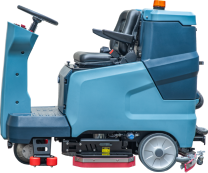
A floor scrubber brush or pad should be selected by matching floor surface, soil type, required cleaning force and risk of surface damage. Softer pads may protect finished floors but remove less stubborn soil. More aggressive brushes or pads may improve cleaning but can increase wear, energy use and floor-surface risk.
| Floor or soil condition | First selection signal | What to verify |
|---|---|---|
| Smooth finished floor | Use a less aggressive pad or brush first | Check for dulling, scratches and water residue. |
| Textured concrete | Use brush contact that reaches low spots | Check debris removal and pad wear. |
| Tire marks | Test pad, detergent and contact time together | Do not judge the pad alone. |
| Food or public-area residue | Balance cleaning force and fast recovery | Check slip risk after drying. |
| Sensitive coating | Start with a small-area test | Confirm the coating is not damaged. |
Treat brush choice as a surface decision
A scrubber brush or pad touches the floor more directly than many other machine parts. It should be chosen by floor material, coating condition, soil type and cleaning frequency.
Using an aggressive pad on a sensitive coating can make a short test look effective while shortening floor life. Using a very soft pad on heavy soil can create repeated passes and operator frustration.
Test pad, detergent and dwell time together
Poor cleaning is not always a brush problem. Detergent dilution, contact time, soil age, water flow and route speed all affect the result.
A useful test keeps the route and machine settings stable while changing only one variable at a time. This makes the final recommendation easier to defend.
Check wear and surface change after drying
The floor should be inspected after it dries, not only while it is wet. Some surface marks, dulling, residue and streaking appear after evaporation.
For epoxy, tile, polished concrete or coated surfaces, record before and after photos and note whether the cleaning tool changed gloss or surface texture.
Use different tools for different zones
A facility may need different brushes or pads for entrances, oily areas, public corridors and storage zones. One tool rarely performs best in every zone.
Keeping zone-specific tool choices in a simple chart helps operators avoid using a harsh tool where a softer one is safer.
Connect consumables to spare-parts planning
Brushes and pads are consumables. Buyers should ask for model compatibility, expected wear signals, replacement method and how to order the correct item later.
Distributors should keep photos and names of common consumables so support teams can identify replacements without guessing from a generic product title.
Use sample results as procurement evidence
A sample test should record floor surface, soil, detergent, brush or pad type, pass count, water flow, drying result and operator comment.
These records make later machine selection more credible because they show the recommendation came from a repeatable cleaning condition, not only a catalog comparison.
Limitations and checks before purchase
- Brush and pad advice should not override floor manufacturer care instructions.
- Aggressive tools may improve cleaning while increasing floor wear or battery consumption.
- Unknown coatings should be tested in a small area before full-route cleaning.
Traceable evidence
Sources and evidence boundaries
These sources separate ELEREIN-published facts from neutral methods, safety guidance and regulatory context.
- Supports
- Safety context for commercial floor treatment machines, including scrubbers and sweepers.
- Boundary
- A standard listing does not certify an ELEREIN model or replace the exact declaration, report or manual.
- Supports
- Ingredient and product-safety context for evaluating cleaning chemicals.
- Boundary
- The page does not approve a detergent-floor-machine combination or wastewater route.
- Supports
- Repeatable performance and safety testing context for cleaning equipment.
- Boundary
- A laboratory service page is not a model-level report or certification.
How to use these sources: Use each source only for the safety, testing, regulatory or procurement principle stated in its boundary. External sources do not certify, endorse or validate an untested ELEREIN model.
Official product context