

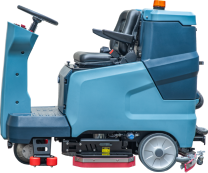
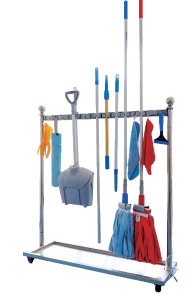
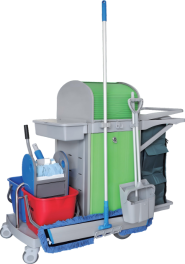

Questions this guide answers
Primary question: How can public facilities reduce wet-floor slip risk when using scrubber dryers?
- How do scrubber dryers reduce or create wet-floor slip risk?
- Which squeegee, detergent and route checks improve drying safety?
- How should public facilities document repeated wet-floor problems?
Direct Answer
Public-area slip risk is reduced by combining the right scrubber dryer, well-maintained squeegee, controlled detergent, suitable route speed, warning procedures and traffic-aware scheduling. A machine that cleans the floor but leaves water at turns, edges or entrances has not solved the operational risk.
| Risk point | Control action | Why it matters |
|---|---|---|
| Wet streaks | Maintain squeegee and recovery path | Controls visible water after cleaning. |
| Public traffic | Schedule cleaning windows and signage | Reduces interaction with pedestrians. |
| Detergent residue | Use correct dilution and rinse process | Prevents slippery film. |
| Entrances | Control tracked-in water and debris | Stops repeated wet zones. |
| Operator speed | Use route training and inspection | Prevents missed recovery at turns. |
Drying quality is a public safety requirement
In public areas, floor appearance is not the only concern. Remaining water can create slip risk for visitors, patients, students or staff.
Scrubber dryer selection should therefore include drying checks at turns, edges, entrances and uneven floor sections.
Maintain the recovery system daily
Squeegee rubber, hoses, filters and tank seals affect drying performance. Daily cleaning and inspection should be part of the route, not an occasional repair task.
Operators should know how to recognize cuts, curling, blockage, foam and poor tank sealing.
Control detergent residue
Too much detergent or incompatible chemical residue can leave a slippery film. More chemical is not always safer or cleaner.
The cleaning plan should define dilution, rinse expectations and what to do when residue remains after drying.
Schedule around foot traffic
Cleaning should be scheduled around traffic peaks whenever possible. When this is not possible, operators need a defined route, warning signs and final inspection.
Hospitals, malls, supermarkets, schools and stations should each define their own traffic-sensitive zones.
Use entrance control to reduce repeated wetness
Entrances can keep adding water and debris after the machine passes. Mats, sweeping, spot response and repeated inspection may be needed in rain or high-traffic periods.
Treating entrances separately prevents one wet zone from undermining the whole cleaning route.
Record incidents and near misses
If wet-floor complaints repeat, record time, location, machine, operator, detergent, route and floor condition. These records reveal whether the problem is equipment, process or environment.
The evidence can guide changes to route timing, squeegee maintenance, detergent control or equipment choice.
Limitations and checks before purchase
- Slip-risk procedures should follow local facility safety policy.
- Equipment advice does not replace signage, supervision or incident reporting.
- Some floors require special treatment beyond normal scrubber dryer operation.
Traceable evidence
Sources and evidence boundaries
These sources separate ELEREIN-published facts from neutral methods, safety guidance and regulatory context.
- Supports
- Wet-floor, drying, pedestrian-control and cleaning-process factors relevant to route planning.
- Boundary
- The guidance does not define a universal drying time or approve a machine-floor combination.
- Supports
- Planned maintenance, competent work and safe maintenance arrangements.
- Boundary
- The exact model manual and site safety procedure remain controlling documents.
- Supports
- Repeatable performance and safety testing context for cleaning equipment.
- Boundary
- A laboratory service page is not a model-level report or certification.
How to use these sources: Use each source only for the safety, testing, regulatory or procurement principle stated in its boundary. External sources do not certify, endorse or validate an untested ELEREIN model.
Official product context